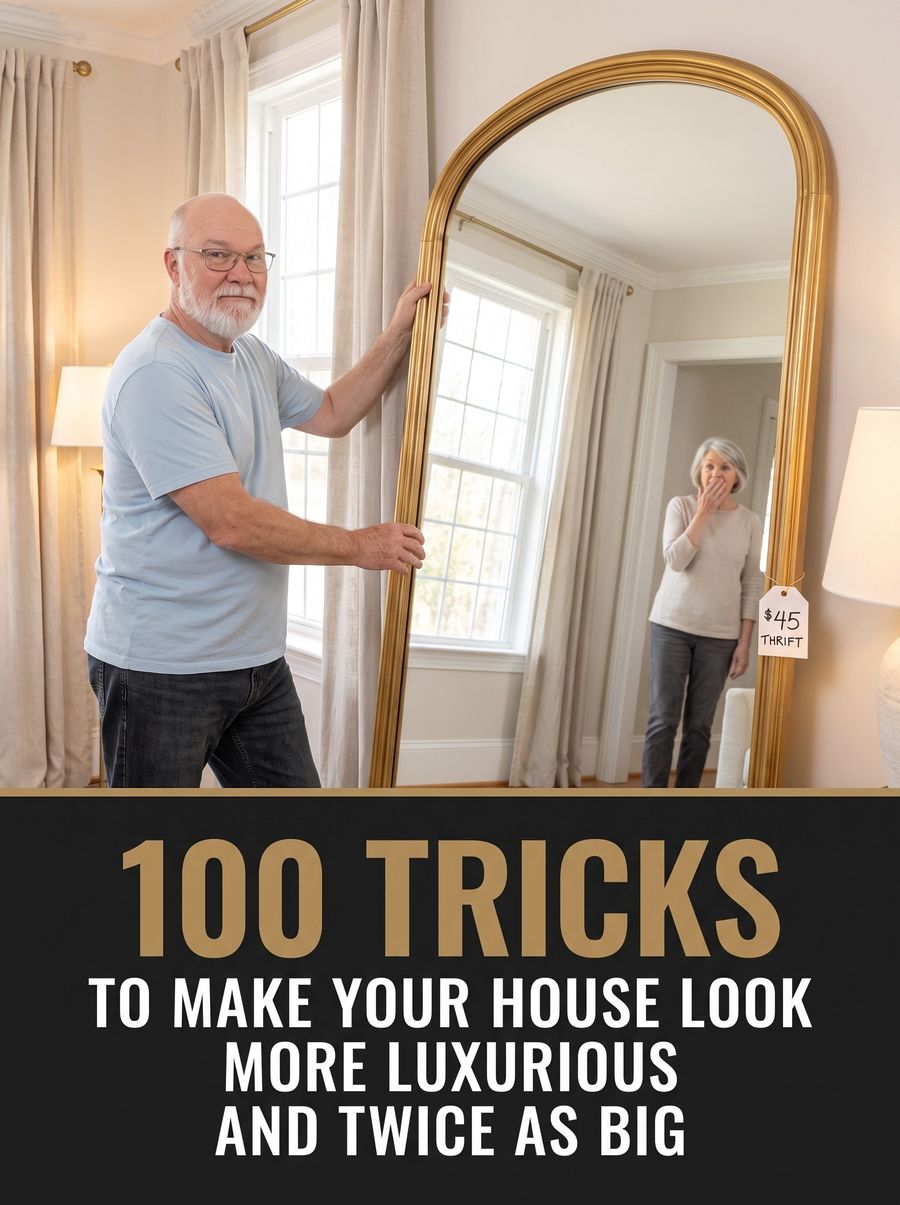
A house doesn't look expensive because of what's in it. It looks expensive because of where things go, how high they hang, and what color the light is. One hundred of those rules, room by room. A decorator charges $150 an hour to use them. This is $17.
Or save with the Home Trio and the Whole House Library.
Secure checkout by Stripe, right on this page. Your book arrives in your inbox instantly.
Here is where the money goes when you hire the look instead of learning it. Every number below is from the book.
New baseboard installed: $6 to $9 a foot. The builder put in a thin 3¼-inch strip. Built up to five or seven inches with one board and a cap, it costs about $1.50 to $2.50 a foot, and the room looks a hundred years older in the best way.
A wainscot quote: about $1,300 a room. Beadboard sheets, a cap and an afternoon do the same room for around a fifth of that. The book shows you the cuts.
An electrician for one dimmer: $80 to $200. Sometimes that's money well spent, and the book says when. Often a $24 plug-in lamp dimmer does the same job without a single wire.
Custom valances: $200 to $400 a window. They chop the top off the glass and make the ceiling look lower. Taking them down is free, and the window looks a foot taller the same afternoon.
A storage unit: often past $100 a month. Paid for years, to keep things you'd never buy again at the price you paid. Chapter one is about letting the room breathe before you spend a dime.
Plug-in air fresheners: a couple of hundred dollars a year. A house that smells expensive smells of almost nothing. The old way costs a lemon, a cinnamon stick and ten minutes with the windows open.
A room that looks more expensive and a room that looks bigger are nearly always the same room: clear surfaces, more light, fewer and better-placed things, and lines that carry your eye up. That's why this book does both at once, in the order you'd do them.
You don't need a new sofa, and you don't need a contractor. You need to know that the curtain rod goes two to four inches under the ceiling, that the front legs of every chair sit on the rug, that the mirror goes across from the window and never beside it, and that one white on every piece of trim does more than any paint color. And because our eyes aren't what they were, there's a whole chapter on light that looks warm and rich and still lets you read the newspaper.
One hundred numbered tricks in seven chapters, each with the reason it works, the honest price, and the version for renters, condos and HOAs when you can't nail or paint.
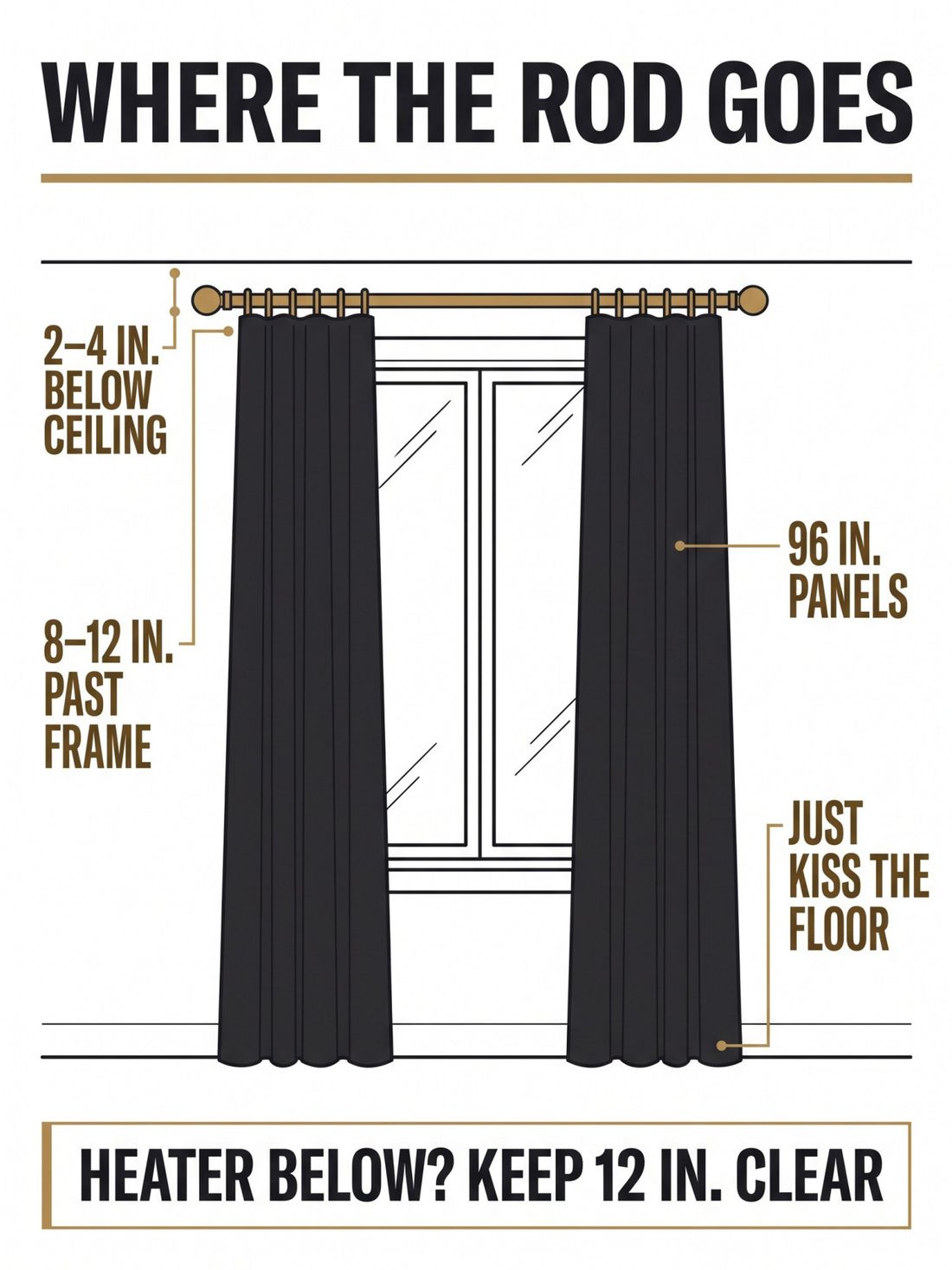
Two to four inches under the ceiling, eight to twelve inches past the frame, panels that just kiss the floor. An eight-foot ceiling reads like ten. Plus rings and wands so you can open them without a ladder.
Why a "soft white" bulb leaves you squinting, and how lumens, color and CRI fix it. Three lamps at three heights, the builder's dome light retired, and a lit path to the bathroom at night.
The front legs of every seat on the rug, plus eighteen inches all round. Tape it out before you buy. And pads and flat edges, because a curled corner is how people our age break a hip.
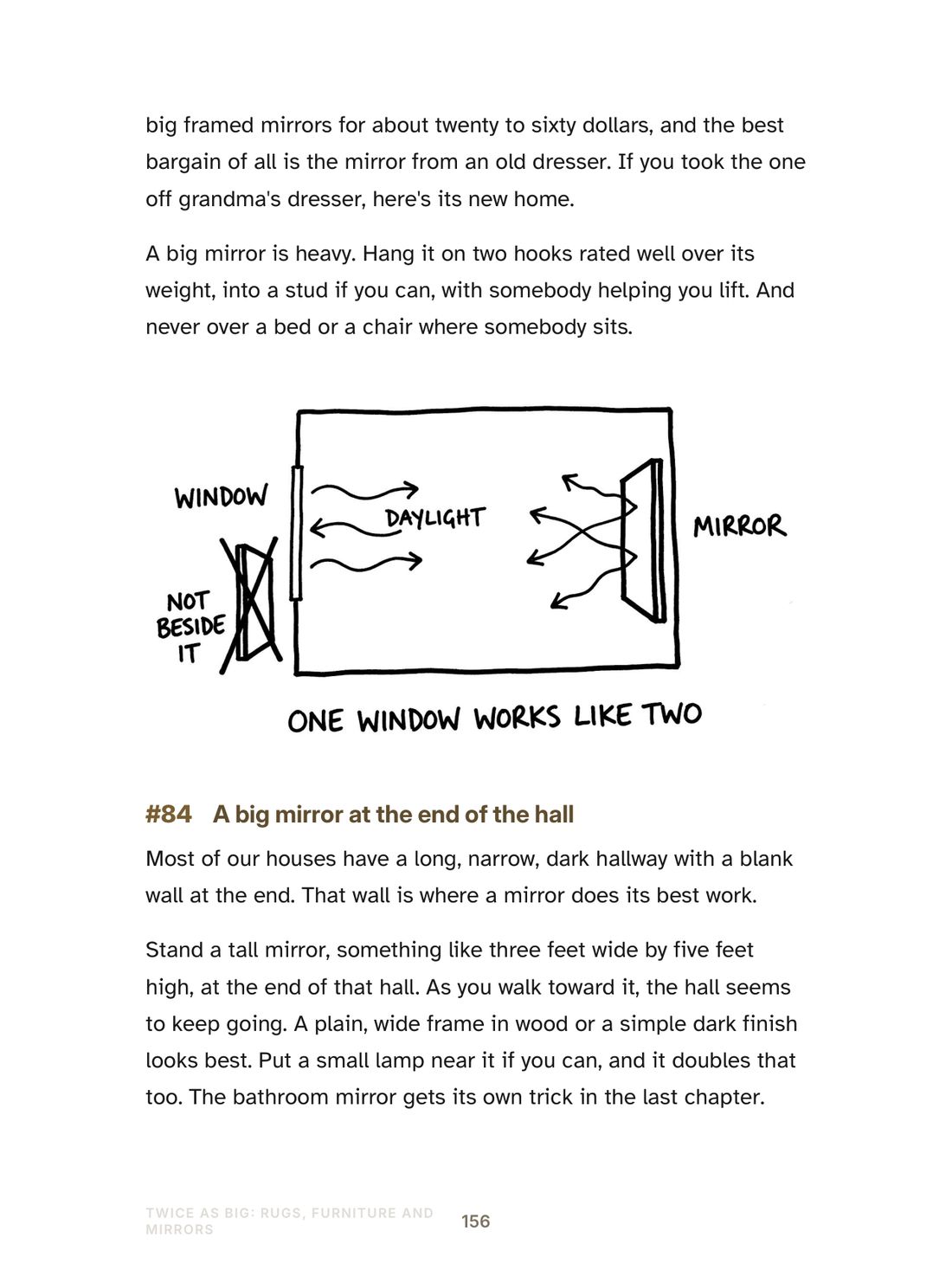
Across from the window, never beside it, and what it should reflect. The big mirror at the end of a narrow hall. And how to strap a leaning mirror to a stud so it can't come down.
Flat on the walls, satin on the trim, one white for the whole house. The baseboard built up, a door header for about fourteen dollars, and caulk where the builder skipped it.
Honest 2026 prices on both sides: what you'd pay a pro, what it costs to do yourself, and the jobs where hiring somebody is the right answer — electrical, ladders over your head, grab bars into studs.
Real pages from the book. Large print made for older eyes, 77 photos, hand-drawn sketches and full-page charts, and a man talking you through it.


Fifteen free tricks for one weekend: the seven-day counter rule, three things on the entry table, valances down, windows washed the old way, the sofa off the wall and the matched set broken up.
One color per room, lumens not watts, three lamps at three heights, thrift lamps with new shades, dimmers and when to call the electrician, lights under the cabinets and a night path.
Curtains high and wide, panels that kiss the floor, lined thin panels, the line every room is built on, a picture rail, a deep sill from a fifteen-dollar board.
Sheen and color, the test board, the woodwork in one quart, the built-up baseboard, the door header, wainscot for a fifth of the quote, and the rental, condo and HOA versions.
Switch plates in one finish, two metals only, levers that are easier on the hands, salvage knobs, brass brought back, a hollow door made to look solid, grab bars that look like towel bars, the front door.
The right size rug, furniture that shows floor, a sofa and two chairs instead of the sectional, grandma's big dresser in a small room, the mirror, and where every picture hangs.
Cabinets painted the way that lasts, appliances kept at waist height, a small bath that looks bigger, a bed like a good hotel, a house that smells clean, and the ten-minute evening reset. Plus the 100-trick checklist for the fridge.
The same checkout, the same instant delivery. The packs add the books our readers ask for next: running the house on almost nothing, a pantry that keeps, and winter without the grid.
Yes. Fifteen of the tricks are free and need nothing but an afternoon. Most of the rest are a screwdriver, a tape measure and a trip to the hardware store. Where a job needs a ladder over your head, wiring or a stud behind the drywall, the book says so plainly and tells you to hire it out.
Yes. There's a whole trick on exactly that, and most of the book never touches a wall: light, curtains on tension rods and hooks, rugs, mirrors, furniture placement, the counters and the smell of the house. Where something needs a nail or paint, you'll find the version that doesn't.
That's the most common worry we hear, and it's why chapter two exists. Warm and bright aren't opposites. The trick is buying by lumens instead of watts, choosing a high CRI, and putting the light where you sit. You keep the cozy color and you can still read.
The Home Trio adds The $0 Household Bible and The $0-Bill House Protocol. The Whole House Library adds three more on top of that: The No-Fridge Pantry, 77 Forgotten Recipes From the Past and The Backyard Pest Defense Bible. You pick in the checkout, and every book arrives by email the moment you pay.
It's a digital PDF: 192 large-print pages with 77 photos, sketches and full-page charts. The moment your payment clears, the download link is emailed to you, usually within a minute. Read it on a phone, a tablet or a computer, and print the checklist at the back for the refrigerator.
Because it's an instant digital download, all sales are final. If you have any technical problem with your file or your download, email contact@liibro.com and we'll make sure you get your copy. The details are in our Refund Policy.
Option 1: Hire the look. A decorator at $100 to $200 an hour, a carpenter's quote for trim, an electrician for a dimmer, new furniture because the old furniture "looks tired." Most of it goes to things that were never the problem.
Option 2: Spend $17 and one weekend. Clear the counters, take the valances down, move the rod up, turn the dome light off and three lamps on. Then walk into the room the way a guest will.
By continuing, you agree to our Terms and Privacy Policy.